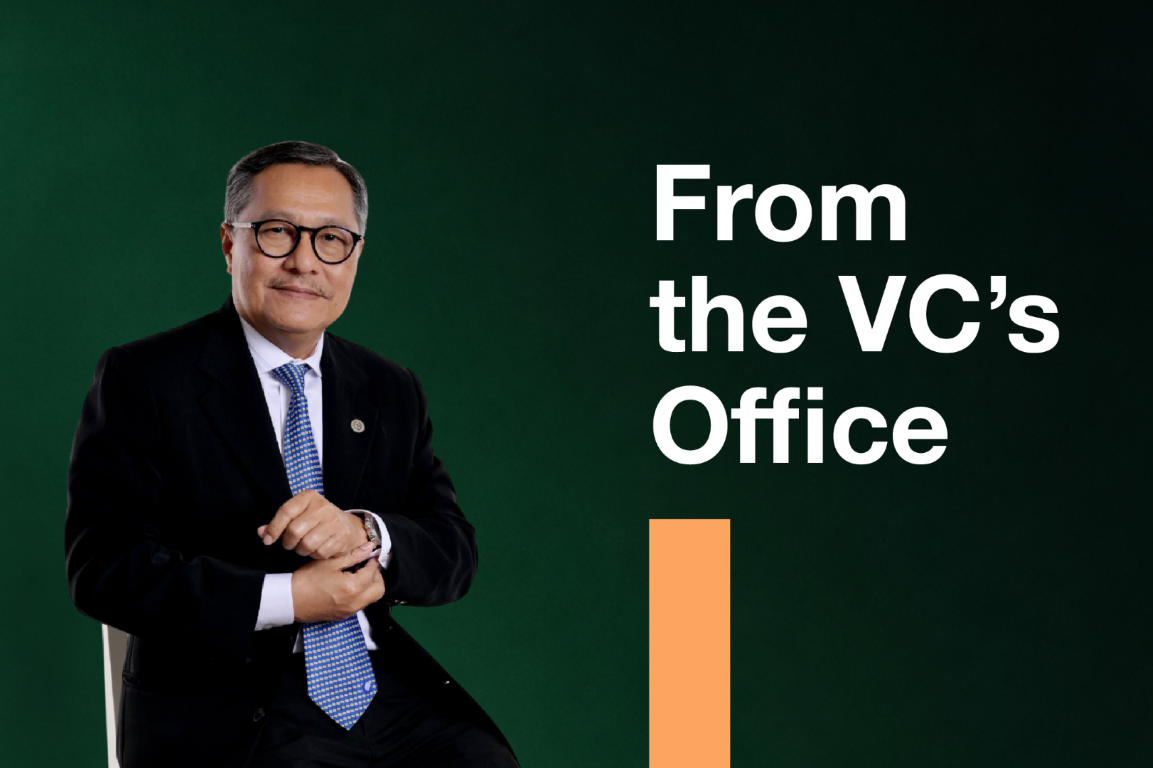
By Professor Extraordinaire Paul Prinsloo Visiting Senior Fellow, OUM
The urgency trap and AI as quicksand
It is the stuff of nightmares. You dream that you are trapped in quicksand, and the more you struggle, the deeper you sink. In many adventure films, sinking deeper does not end well. Yet if we can believe the Encyclopaedia Britannica, death by quicksand is all but unheard of.
Since the launch of ChatGPT in November 2022, there has been an urgency in the air.
Many institutions, managers and educators feel that they are being pulled under by the dramatic reconfiguration of “knowledge”, “learning”, “assessment” and “teaching”. The continuous and intentional bombardment of updates and newer, faster models, together with the fear of being left behind, resembles for many the experience of being trapped in quicksand, where resistance is futile.
Navigating the quicksand
Institutions and individuals navigate artificial intelligence (AI) as quicksand differently. At one end of the spectrum stand sceptics and critical scholars who raise concerns about intellectual property rights, cognitive offloading, the deskilling of students, and ethical questions of privacy and the commercialisation of online spaces. At the other end are those who embrace AI as team member and research partner, who use it to develop curricula and assessment, mark assignments, run analyses and co-author scientific papers. Somewhere in the middle sits a group of educators and students who share some of these concerns but accept that AI is here to stay, and who judge it better to find critical and ethical ways of engaging with it, to develop local AI systems and models, and to build regulatory frameworks and structures that hold AI to account.
Re-assessing the quicksand
Globally, protests are mounting against the proliferation of data centres and their immense environmental impact, and against companies such as Palantir and Anthropic for their involvement in surveillance, military campaigns, genocide and automated warfare. Emerging evidence shows that many companies which initially cut jobs in favour of AI have since re-appointed the employees they dismissed. Research by the National Bureau of Economic Research, reported in the Harvard Business Review (1 July 2026), likewise finds no measurable improvement in productivity attributable to AI over the past three years. There is alarm that the first “AI- native” appointees bring alarmingly shallow ideas and little capacity for independent and critical thought. There is growing consensus, too, that the generation of falsehoods is inherent in the character of large language models, that more training data does not resolve them, and that generative AI cannot deliver on its own what was first promised, although combinations of different types of AI, such as generative AI paired with neuro-symbolic AI, may hold more promise.
That change is in the air, and that a great deal of hype circulates within it, is true. No one would disagree that large language models have disrupted research, the validation of knowledge claims, teaching, assessment and learning. What we have reason to question is whether the urgency, and the narrative of AI as quicksand, is necessarily valid or helpful.
"Institutions and individuals navigate AI as quicksand differently"
If not quicksand, then what?
In the Minority World, or Global North, there are signs of national governments responding with regulation and legislation, holding big AI companies to account and moving away from American Big Tech. France is migrating from Microsoft to Linux, and the European Parliament from Google to the French alternative Qwant. In Germany, the state of Schleswig- Holstein has replaced most of its Microsoft-powered systems with open-source alternatives, cancelling nearly seventy per cent of its licences. Norway has banned generative AI from elementary schools and requires teacher supervision of its use by children between fourteen and sixteen. A growing number of countries are restricting access to social media for children under sixteen.
In the Global South, or Majority World, AI as quicksand plays out differently. There is at present little evidence of restrictions of the kind found in Norway. American Big Tech, moreover, offers “deals” to countries in the Global South in exchange for minerals, data or favourable economic conditions. Starlink extends access to digital networks amid concerns that such access erodes sovereignty and outsources the digital futures of nations to private organisations headquartered in the Global North. The investments of Microsoft, Google and others are read as votes of confidence, but they come at great cost to citizen privacy and digital sovereignty, and risk colonisation by the Empire of AI.
There is, however, emerging resistance in the Global South, not only against American Big Tech but against the urgency itself and the fear of missing out. India has launched a hackathon inviting startups, researchers, students and institutions to develop affordable, local, open-source models that answer the need for multilingual AI, and the UN-backed Africa AI hub supports the growth of local AI ecosystems.
"The real competitive advantage
of AI does not lie in speed
but in careful, purpose-driven integration."
Purpose-driven integration as antidote to the urgency trap
In a recent Harvard Business Review article (1 July 2026), David De Cremer warns against the “urgency trap”, in which “leaders over-prioritize problems that are easy to see and measure while neglecting deeper, longer-term issues that are harder to diagnose”. The “real competitive advantage of AI does not lie in speed”, he argues, but in careful, “purpose-driven integration”. Successful integration does not begin with AI, or with the intentional narratives that stoke the fear of losing out or being left behind, but with an understanding of why the organisation exists and what kind of value it wants to create for its staff, its stakeholders and the broader society.
The current AI moment presents itself as quicksand which, if we believe the hype, will swallow us unless we respond as fast as possible. The irony is that in our haste we sink deeper than before, in sand that may not be quicksand at all.
inspired is a quarterly publication by: UNITEM SDN BHD, Menara OUM, Block C, Kelana Centre Point, Jalan SS7/19, Kelana Jaya 47301 Petaling Jaya, Selangor