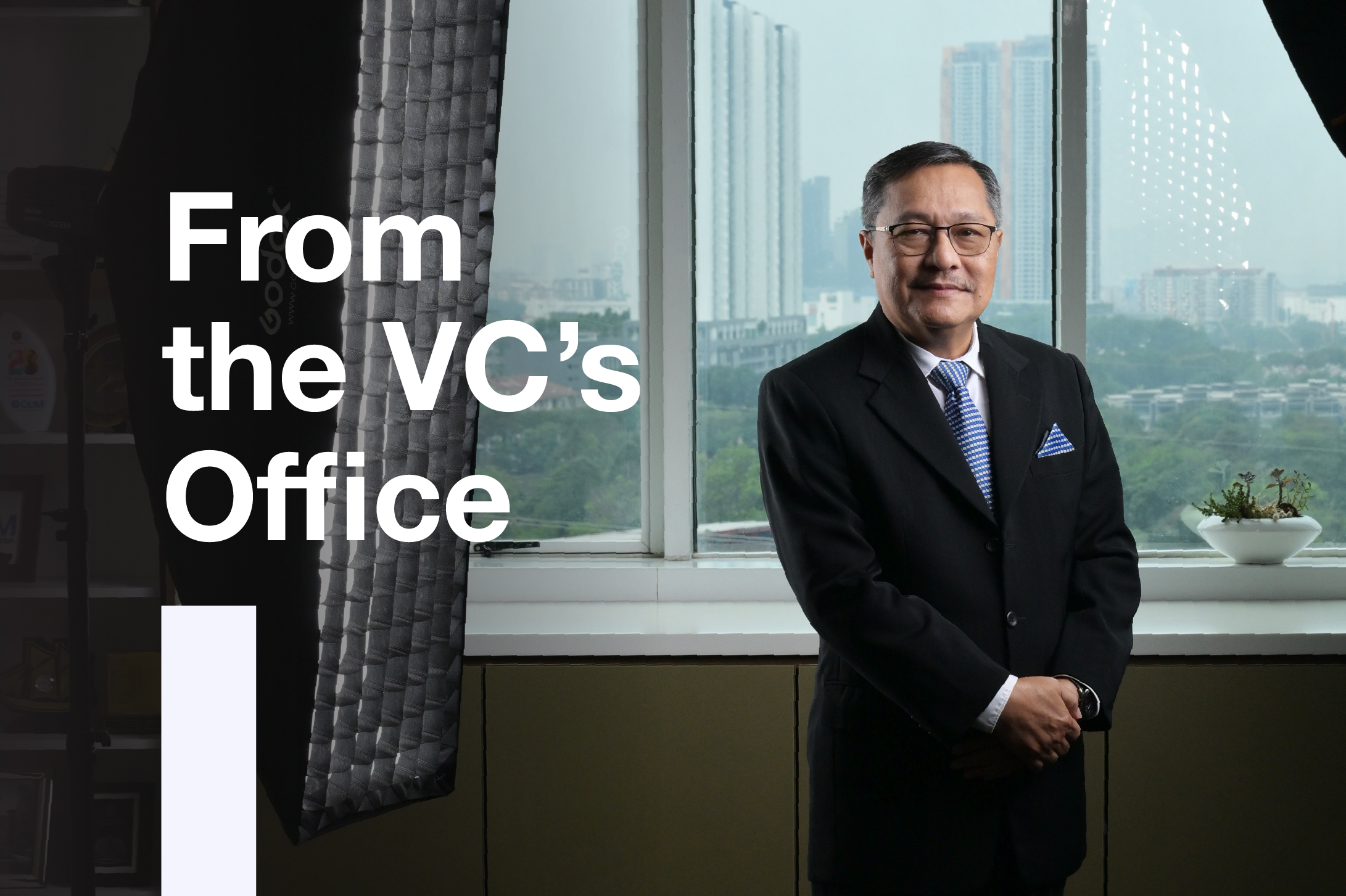
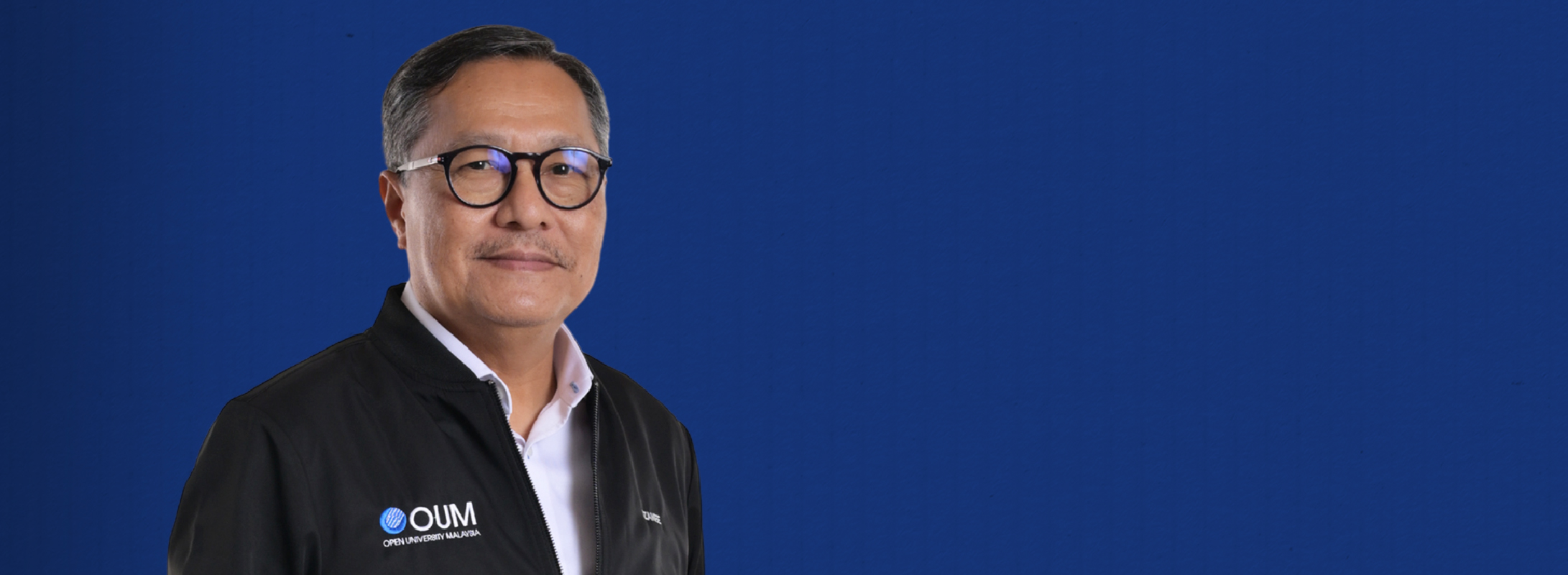
Tengku Munira (TM): Now that we have entered 2026 and had some time to reflect, how do you look back on OUM’s 25th anniversary in 2025? Which achievement stands out most to you, and why?
Prof Dato’ Dr Ahmad Izanee Awang (AIA): Last year was an especially meaningful one for OUM. It was our silver jubilee, and we showed that what we achieved over the last quarter century was no accident. I am especially proud that Malaysians have continued to place their trust in OUM: record-breaking numbers in new enrolments, as well as active learners per semester meant we made more in terms of revenue and profit, which in turn means we can invest more on improving what we offer our learners and stakeholders.
The awards we received during and following our silver jubilee year remain deeply encouraging and affirming. In August 2025, we were honoured with the Excellence in Higher Education (Lifelong Learning) Award at the inaugural MQA Awards. This recognition is especially meaningful as it highlights our ongoing commitment to democratise lifelong learning and reinforces OUM’s leadership in advancing lifelong learning in Malaysia.
More recently, in January 2026, OUM received the Platinum Award at the Putra Brand Awards. This reflects the continued trust and confidence that the public places in OUM as a dependable and flexible provider of quality education.
Finally, the appointment of OUM’s first International Advisory Board (IAB) through the efforts of our Centre for Digital Education Futures (CENDEF) marks a significant institutional milestone. For the first time, OUM has formalised a high level advisory body comprising five distinguished international scholars and one local industry expert to support our long term strategic planning as we chart the next 25 years of the University’s trajectory. Over the coming years, the impact of this engagement will become increasingly visible in the direction we take.
TM: As OUM looks ahead to 2026 and beyond, what fundamental shift is required for the university to sustain its leadership in digital education amid increasing competition and evolving learner expectations?
AIA: Across the current post-secondary education landscape, there is a marked shift toward skills-based courses, while interest in traditional academic degrees has begun to soften. Working adults in particular are seeking qualifications that strengthen their immediate workplace relevance. Although they continue to value the broad intellectual foundations offered by traditional degrees, many are increasingly opting for focused, practice-oriented expertise that can be applied directly within their professional settings.
OUM recognises that sustaining leadership in digital education requires more than delivering degree programmes online. It requires repositioning the University from a provider of conventional academic qualifications to a centre for continuous capacity and professional development. In practical terms, this means strengthening our digital capabilities while redesigning our offerings to be learner-driven, skills-oriented, and closely aligned with industry and societal needs. The direction for us is clear: becoming increasingly digitally enabled and deeply connected to the real economy, supporting lifelong learning through flexible, relevant, and professionally meaningful pathways.
TM: You have often referred to the four pillars of OUM’s 2022 to 2026 Strategic Roadmap, whether in staff addresses, management meetings, or stakeholder engagements. These pillars are growth, visibility, sustainability, and harmony. How do they guide the University’s priorities and inform its strategic decision making in the years ahead?
AIA: The four pillars you mention are crucial and interconnected for OUM. Together, they serve as a unified compass for our decision-making. Growth ensures that we continue expanding access to quality, flexible education, particularly through digital innovation, industry-aligned programmes, and lifelong learning pathways. Visibility strengthens our reputation as a credible leader in open, distance, and digital education (ODDE) nationally and internationally. It calls on us to highlight our academic strengths, research contributions, and technological innovation. Sustainability keeps us disciplined. Every initiative we pursue must be financially sound, operationally efficient, and aligned with long-term institutional resilience. Finally, harmony reminds us that our greatest asset is our people: our staff, learners, and partners. We are committed to cultivating a culture of collaboration, inclusivity, and shared purpose. In essence, when we make strategic decisions, we ask: Does this enable responsible growth? Does it enhance our standing? Is it sustainable? And does it strengthen our community? When all four pillars are aligned, we know we are moving in the right direction.
TM: With the continued rise of digital learning, how is OUM evolving its open and distance learning heritage to meet changing learner expectations?
AIA: The continued rise of digital learning is not a departure from our open and distance learning heritage; rather, it deepens and reinterprets it. For us, “open” has always meant widening access and removing structural barriers. “Distance” has meant flexibility in time, place, and pace. “Digital” now provides the infrastructure through which those principles can be realised more intelligently and at greater scale.
Today’s learners increasingly expect flexibility, personalisation, and clear relevance of their studies to their careers. In response, we are moving beyond simply delivering online content to building learner-centred digital ecosystems. This includes adaptive learning tools, data-informed academic support, and more flexible pathways such as micro-credentials and stackable programmes.
We are leveraging digital platforms, analytics, and emerging technologies to tailor learning journeys, enabling learners to progress at their own pace, build skills in real time, and connect their studies directly to workplace demands. We are also strengthening engagement through interactive platforms and collaborative online environments, ensuring that digital learning remains human, supportive, and outcome-driven.
In this sense, we are not moving away from ODL. We are advancing it. OUM is evolving from a provider of distance education into a digitally integrated platform for lifelong, skills-focused learning that is accessible, responsive, and aligned with the realities of a rapidly changing world.
TM: Adaptability and collaboration have been key to OUM’s success. What role do faculty and staff play in driving this transformation, and how does a strong culture of harmony support that effort in OUM’s unique operating environment?
AIA: In an ODDE environment, academics are not just subject matter experts; they are learning designers, facilitators, mentors, and innovators. They continuously adapt curricula to industry needs, embrace digital pedagogies, and experiment with new technologies to enhance learner engagement.
Our administrative and support teams are equally critical. They ensure seamless learner experiences, strengthen partnerships, optimise systems, and sustain the operational agility that allows OUM to respond quickly to change.
However, transformation can only be sustained within a strong culture, and that is where our harmony pillar becomes essential. Allow me to highlight what harmony means at OUM: open communication and mutual respect; shared accountability toward institutional goals; inclusive leadership that values diverse perspectives; and continuous professional development and wellbeing support.
As you can surmise from these points, harmony cannot be achieved by chance. It requires intentional leadership, clear values, and regular engagement across all levels of the institution.
At OUM, we recognise that when faculty and staff feel trusted and empowered, and can work together toward a common purpose, adaptability becomes natural and collaboration becomes a strength. That is how OUM sustains transformation while preserving the human spirit at the heart of education.
TM: What do you see as the most significant challenges facing OUM, and higher education more broadly, in the next few years, and how is the university positioning itself to respond to them?
AIA: At OUM and indeed across higher education, I believe the next few years will be defined by three major challenges.
First, accelerating technological disruption. Artificial intelligence (AI), automation, and digital platforms are reshaping how knowledge is delivered and how skills are acquired. Universities must continuously adapt curricula, assessment models, and teaching approaches to remain relevant. At OUM, we are investing in digital innovation, strengthening AI-enabled learning tools, and redesigning programmes to focus on skills and real-world application.
Second, changing learner expectations. Today’s learners demand flexibility, affordability, and clear career outcomes. Traditional degree structures alone are no longer sufficient. So, we are expanding micro-credentials, stackable pathways, and industry-aligned programmes to meet these evolving needs.
Third, financial and operational sustainability. Increased competition, regulatory pressures, and cost sensitivities require universities to operate with greater agility and discipline. OUM is enhancing operational efficiency, diversifying revenue streams, and strengthening governance to ensure long-term resilience.
More broadly, higher education must redefine its value proposition: institutions must move from being a one-time provider of degrees to becoming a lifelong learning partner.
In 2026 and beyond, OUM is positioning not merely to react to these changes, but to lead within them. We will do so by remaining mission-driven, technologically responsive, financially prudent, and deeply committed to widening access to quality education.
TM: One last question, Dato’. When we look back on 2026 and the years that follow, what would make you say that OUM has succeeded in this next chapter of its journey?
AIA: I hope that, some years from now, with the benefit of hindsight, we will measure our success by the contribution we have made to the nation.
Everything we do this year, and in the years ahead, is ultimately dedicated to nation-building. When people come to study at OUM, we want them not only to better themselves personally and professionally, but also to appreciate how their learning contributes to the needs of the Malaysian economy, workforce, and society. I also hope we will look back with pride on how OUM has consistently given back, whether through our tax and zakat contributions or through financial assistance to those in need.
Finally, I hope 2026 will be remembered as the year we firmly established a distinctive identity as a digital university, one that continues to provide access through affordable, flexible modes of learning, while championing a lifelong learning culture in Malaysia and across the region.
TM: Thank you very much, Dato’, for taking the time to do this interview.
AIA: Thank you. It’s been my pleasure.

inspired is OUM’s not-for-profit popular journal on the 3Ps – practice, policy and philosophy – of open, distance, and digital higher education (ODDE). Published three times a year, it engages global scholars, policymakers, practitioners, learners, and other stakeholders, as well as a general readership seeking the latest insights and perspectives on ODDHE.
Menara OUM, Block C, Kelana Centre Point, Jalan SS7/19,
Kelana Jaya, 47301 Petaling Jaya, Selangor, Malaysia
+603-7801 1800 (General Line)
inspired@oum.edu.my
Copyright © Open University Malaysia 2018 – 2026 inspired All Rights Reserved.
No part of inspired may be reproduced in any form or by any means without the written consent of the Editor of inspired. Privacy Statement & Personal Data Protection Act (PDPA)